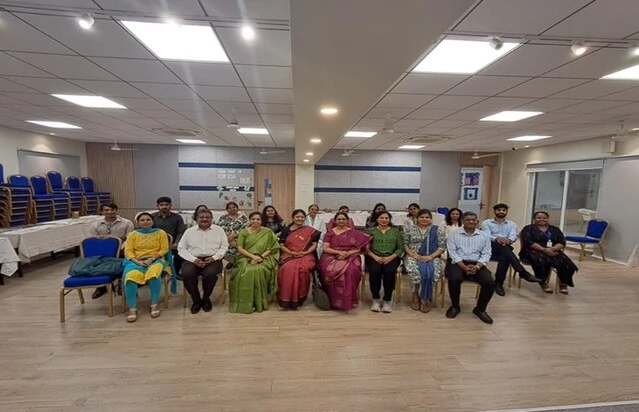
Early Childhood and Foundational Learning at Symbi Stars
The visit commenced at Symbi Stars, where the focus is firmly on foundational skill development through structured learning stations. The curriculum emphasises higher-order thinking skills, actively integrating Bloom's Taxonomy into daily activities to move beyond rote memorisation.
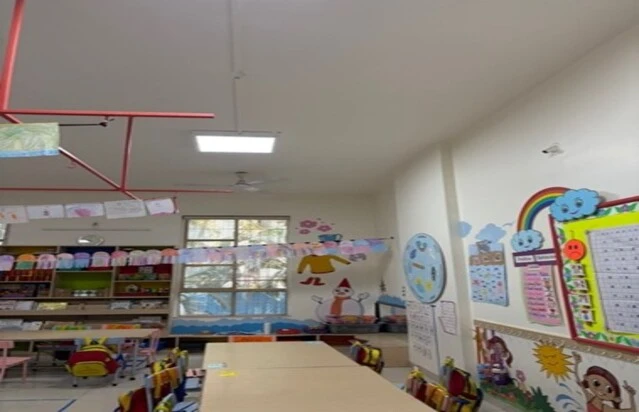
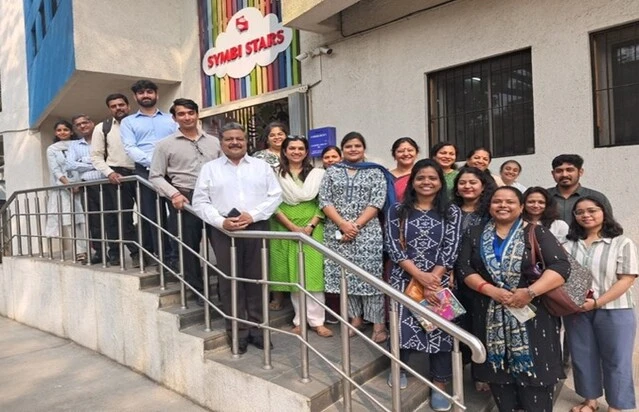
The pedagogical approach blends sensory-motor development with Montessori methods, ensuring a holistic early learning environment. The facility is well-equipped with dedicated spaces, including a gymnastics room, a painting room, and a thematic dramatic room featuring a shopping area, sleeping quarters, and spaces for both free and guided play. Daycare themes rotate weekly to maintain engagement. Notably, qualitative, proprietary assessment methods are used up to the second grade. The institution also emphasizes continuous professional development, offering specialized training for teachers and running a one-year diploma course that includes practical classroom conduction with children. Additionally, Symbi Stars extends its resources to the community by offering evening computer classes for outside students.
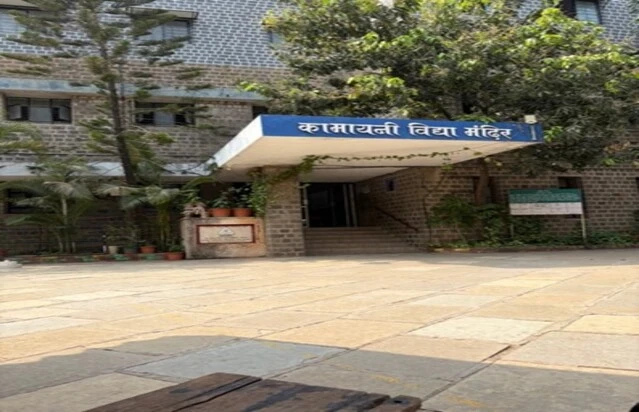
Inclusive Education and Rehabilitation at Kamayani Vidya Mandir
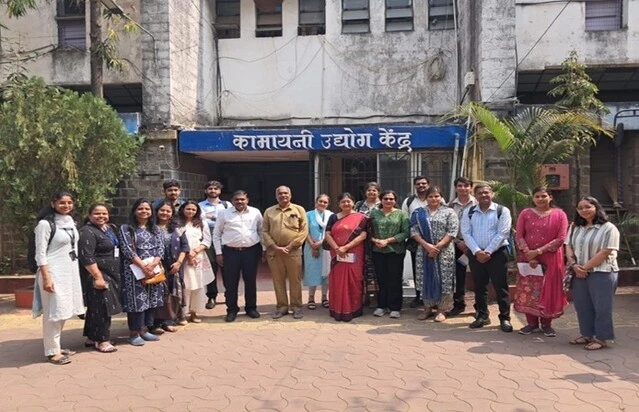
The session at Kamayani Vidya Mandir began with a welcome address by psychologist Narayan Sinde. Established 62 years ago in 1964 by Shindutai Joshi with just two students, the institution has grown to support the education and rehabilitation of 500 students across its three branches. Admission requires children to be at least six to eight years old, potty-trained, and recommended by a civil surgeon. The process begins with a six-month clinical observation to accurately assess the child's abilities, followed by targeted therapy for basic motor skills and the creation of an Individualised Education Program (IEP) for every student. The primary classes foster confidence, evidenced by the students performing dances and delivering their own introductions on stage. Kamayani also excels in the rehabilitation of autistic children and proudly leads Pune's oldest Ganpati performance. For students over 18, the school provides vital vocational education in separate departments, teaching practical skills like notebook binding alongside therapeutic activities. The institution runs a diploma program in special education for intellectual disability, maintains a separate research wing, and actively shares success stories to build awareness among parents.
NEP 2020 Implementation at Symbiosis School, Prabhat Nagar
Symbiosis School provided a strong example of an SSC state board school actively transitioning its curriculum to align with the National Education Policy (2020). Starting from the first standard, the school employs a play-way method and play-based learning, utilizing Foundational Literacy and Numeracy (FLN) workbooks developed in-house by the teachers, alongside standard Balbharti textbooks. Instruction is driven by a copyrighted five-step pedagogy and the PKA (Previous Knowledge Reflections) strategy. Worksheets are meticulously mapped to NCF 2021 standards and focus on LSRW (Listening, Speaking, Reading, Writing) skills. To support this massive shift, extensive post-NEP teacher training has been provided, ensuring differentiated learning designs and a robust mix of formative and summative assessments are utilised. The academic framework includes detailed annual and lesson plans integrating visual thinking, while students maintain reflective sheets. From the third grade onward, Sustainable Development Goals (SDGs) are woven into the curriculum. The school also emphasises practical application with "Fabulous Friday" vocational skills, maintains an exhaustive library archive of past question papers, and provides dedicated career guidance for 9th and 10th graders.
Strategic Frameworks: Presentations by Gargi Ma'am and Sofia Ma'am
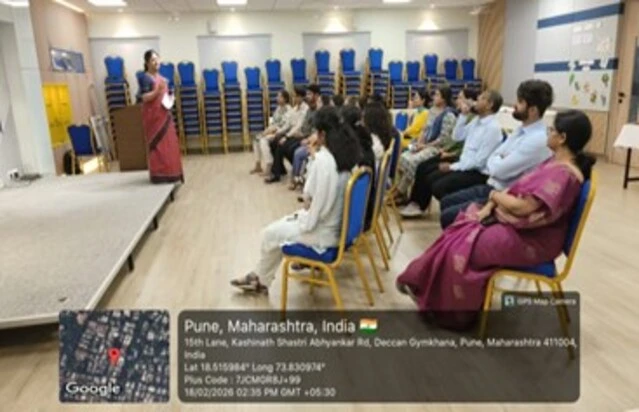
The visit concluded with insightful presentations on curricular strategy. Gargi Ma'am detailed the foundational stage (3-6 years) under NEP, emphasising experiential learning and a child-centric, content-driven approach rather than a marks-driven one. After four years of NEP implementation, the school utilises a backwards-mapped FLN framework up to grade two, incorporating multilingualism, a 360-degree assessment model, and a strong "reflection drive." The curriculum is designed to amplify student voice and choice while maintaining cultural rootedness. Key initiatives include the three-month "Vidya Pravesh" guidance module for students, "Bagless Wednesdays," and dedicated DEAR (Drop Everything And Read) time. Finally, Sofia Ma'am summarised the leadership philosophy required to sustain these educational reforms, advocating for a unified, proactive approach grounded in deliberate and informed actions.